
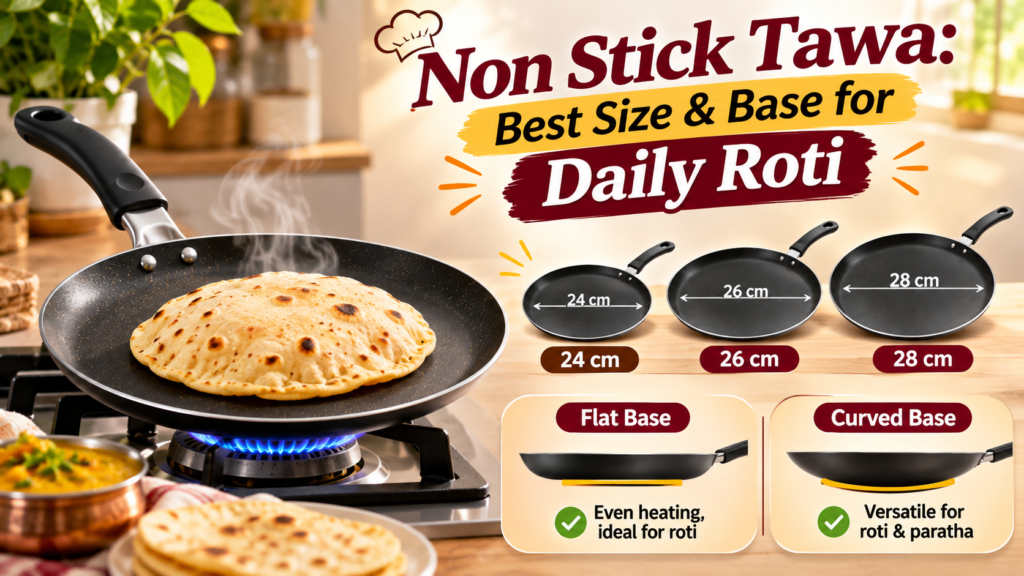
Subah garam parathe, lunch ke liye soft roti aur dinner mein fresh chapati—Indian kitchens mein tawa almost har din use hota hai. Lekin jab roti unevenly cook hoti hai, paratha stick karta hai ya tawa handle karna difficult lagta hai, toh daily cooking unnecessarily frustrating ho sakti hai.
Aise mein ek non stick tawa convenient option ho sakta hai. Iski coated surface food release improve karti hai aur cleaning relatively easy banati hai.
Lekin market mein different sizes, base thicknesses, coatings aur designs available hain. Kya 24 cm sufficient hai? Kya 28 cm better rahega? Aur daily roti ke liye flat tawa lena chahiye ya slightly curved?
Is guide mein hum size, base, coating, handle aur stove compatibility compare karenge, taaki aap apni kitchen ke liye practical choice kar sakein.
1. Non Stick Tawa Kya Hota Hai?
Non stick tawa ek flat ya slightly curved cooking pan hota hai jiske cooking surface par nonstick coating applied hoti hai.
Yeh coating suitable cooking conditions mein food sticking reduce karne mein help karti hai.
Commonly is type ke tawas aluminium body ke saath available hote hain, lekin construction manufacturer ke according vary karti hai.
Common Uses
- Roti aur chapati.
- Paratha.
- Cheela.
- Uttapam.
- Pancakes.
- Certain dosa preparations.
- Lightly toasted sandwiches.
Coated surface particularly un recipes mein convenient hoti hai jahan food ko turn karna ya remove karna difficult ho sakta hai.
Lekin daily roti ke liye non stick tawa purchase karte waqt sirf coating dekhna sufficient nahi hai. Base quality aur heating performance bhi important hain.
2. Daily Roti Ke Liye Non Stick Tawa Suitable Hai?
Roti banane ke liye properly heated cooking surface important hoti hai.
Traditional iron tawa aur stainless steel ke kuch designs bhi chapati preparation mein use hote hain.
Nonstick version ka main advantage convenience hai, especially jab aap cheela, paratha aur other breakfast recipes bhi prepare karte hain.
Advantages
Easy cleaning: Coated surface par food residue generally easily remove ho sakta hai.
Convenient handling: Many models relatively lightweight hote hain.
Versatility: Suitable temperature settings par different breakfast dishes prepare ki ja sakti hain.
Limitations
Nonstick coatings ke temperature limits hote hain. Traditional roti-making techniques mein kabhi-kabhi very high heat ya direct-flame puffing use hoti hai, jo nonstick coating ke liye suitable nahi ho sakti.
Isliye manufacturer ke instructions check karna important hai.
Agar aap frequently high-flame chapati cooking karte hain, toh traditional iron roti tawa bhi consider karein.
3. Non Stick Tawa Ka Kaunsa Size Best Hai?
Tawa size choose karte waqt roti ka diameter, burner size aur available cooking space consider karein.
Commonly 24 cm, 26 cm, 28 cm aur 30 cm designs available hote hain.
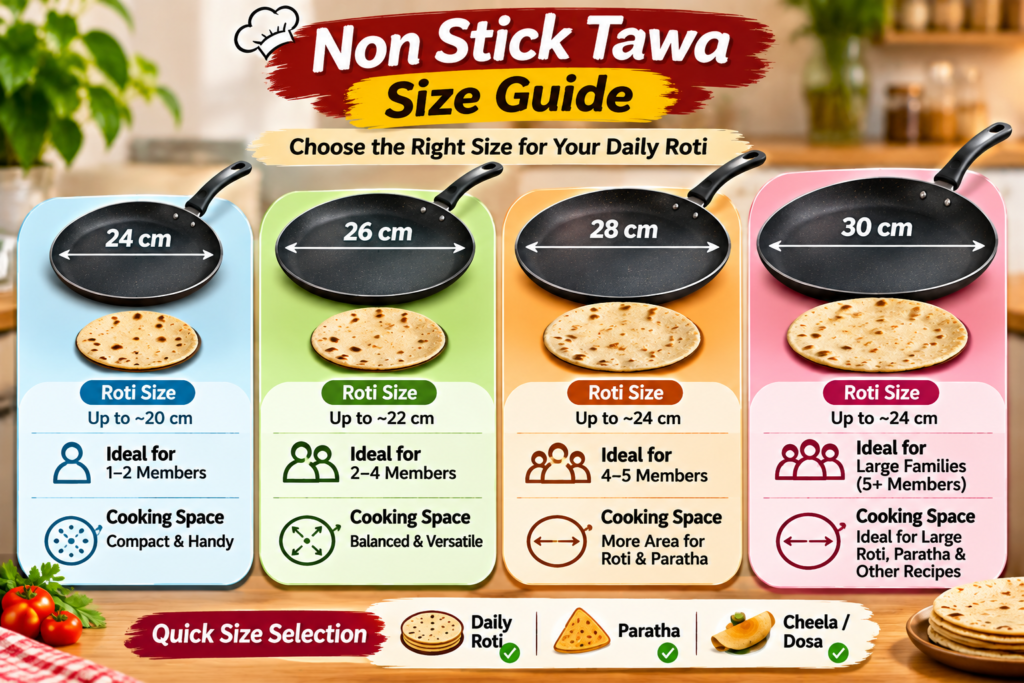
Yeh approximate suggestions hain. Actual usable flat surface aur rim design model ke according vary karte hain.
24 cm Tawa
Compact non stick tawa small households ke liye convenient ho sakta hai.
Lekin agar aap large chapati ya paratha banate hain, toh cooking space limited lag sakti hai.
26 cm Tawa
26 cm many Indian households ke liye balanced option hai.
Ismein standard-size roti aur cheela prepare karna convenient ho sakta hai.
28 cm Tawa
28 cm non stick tawa larger roti aur paratha ke liye useful ho sakta hai.
Lekin actual flat cooking area check karna important hai.
30 cm Tawa
Large paratha aur certain dosa preparations ke liye suitable ho sakta hai.
Small burner par oversized tawa unevenly heat ho sakta hai.
Recommendation: Most households ke liye 26–28 cm practical starting range hai, provided burner aur actual cooking surface suitable ho.
4. Flat Base vs Curved Base: Kaunsa Better Hai?
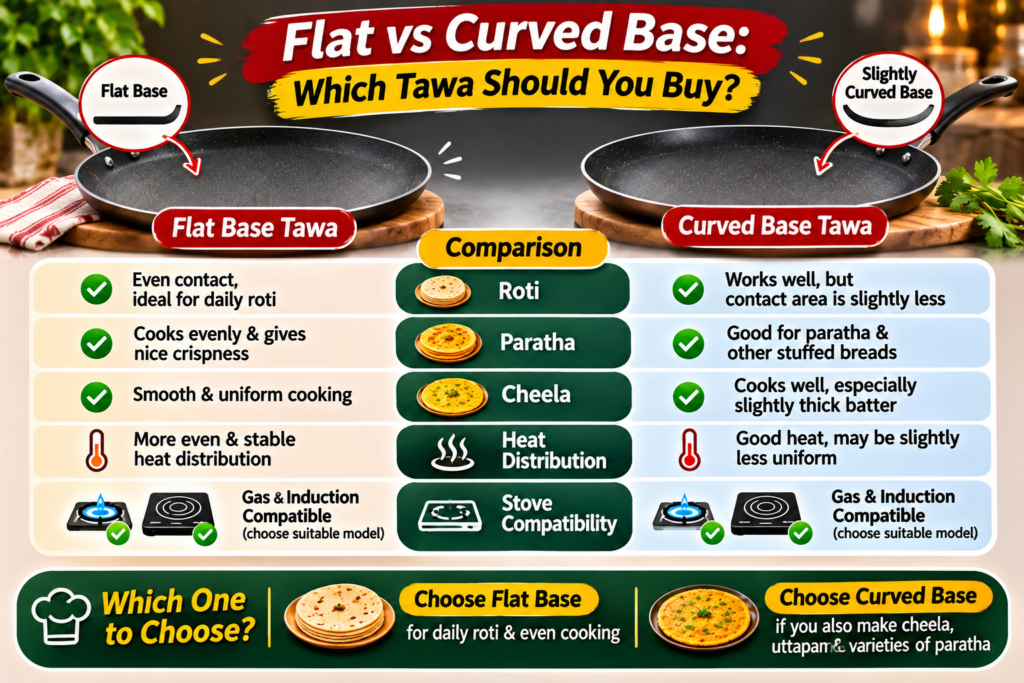
Tawa ka base design cooking experience affect karta hai.
Flat Tawa
Flat cooking surface roti aur paratha ko evenly contact karne mein help karti hai.
Isliye daily chapati preparation ke liye generally practical hoti hai.
Slightly Curved Tawa
Kuch tawas slightly curved ya raised-edge design ke saath available hote hain.
Yeh certain recipes ke liye convenient ho sakte hain, lekin roti ke liye actual contact area important hai.
Comparison
| Feature | Flat tawa | Slightly curved tawa |
|---|---|---|
| Roti contact | Usually more uniform | Depends on curvature |
| Paratha | Convenient | Can work well |
| Cheela | Suitable | Suitable |
| Usable flat area | Often larger | May be smaller |
| Best choice for roti | Generally preferred | Depends on design |
Daily roti ke liye flat-surface non stick tawa generally better starting choice hai.
Lekin cooking surface ke saath underside base stability bhi verify karein.
5. Thick Base vs Thin Base Non Stick Tawa
Base thickness heat distribution aur temperature stability ko affect kar sakti hai.
Lekin thicker base automatically better performance guarantee nahi karta. Material aur overall construction bhi matter karte hain.
Thin Base
Thin-base tawas relatively lightweight ho sakte hain.
Lekin poorly constructed thin bases mein hot spots develop ho sakte hain.
Thick Base
Well-designed thick base heat ko more consistently distribute karne mein help kar sakta hai.
Isse roti aur paratha ke different sections ko similar heating mil sakti hai.
Kya Check Karein?
- Base flat aur stable ho.
- Manufacturer construction details available hon.
- Handle securely attached ho.
- Pan unnecessarily heavy na ho.
- Cooktop compatibility clearly mentioned ho.
Agar aap daily multiple rotis prepare karte hain, toh well-constructed non stick tawa choose karna sensible hai.
6. Nonstick Coating Ki Quality Kaise Check Karein?
Coating nonstick cookware ka important component hai.
Market mein different coating technologies aur product specifications available hain.
Lekin sirf marketing terms dekhkar quality judge nahi karni chahiye.
Buying Checklist
Manufacturer information: Product details aur care instructions clearly available hone chahiye.
Surface finish: Visible scratches, peeling ya defects nahi hone chahiye.
Temperature limits: Recommended cooking temperatures check karein.
Utensil compatibility: Manufacturer-approved utensils use karein.
Warranty: Warranty coverage aur exclusions samjhein.
Coating Ki Life Kaise Improve Karein?
Non stick tawa ko unnecessarily empty high heat par preheat na karein.
Soft cleaning sponge use karein aur abrasive scrubbers avoid karein.
Pan ko completely cool hone ke baad wash karna generally practical hai.
Agar coating visibly damaged ya peeling ho rahi hai, toh replacement consider karein.
7. Gas Stove vs Induction: Compatibility Kaise Check Karein?
Har tawa har cooktop ke liye suitable nahi hota.
Gas Stove
Most gas-compatible tawas household gas burners par use kiye ja sakte hain.
Lekin flame size ko base ke according adjust karein.
Flames ko pan ke sides aur handle tak unnecessarily extend nahi hona chahiye.
Induction Cooktop
Induction ke liye compatible magnetic base required hota hai.
Aluminium body alone induction compatibility guarantee nahi karti.
Manufacturer ki induction marking verify karein.
Practical Tip
Agar aap future mein induction use karne ka plan rakhte hain, toh compatible non stick tawa consider kar sakte hain.
Lekin induction-ready design ke saath actual burner-zone size bhi important hai.
8. Handle Design Aur Weight Kyun Important Hain?
Daily roti cooking mein pan ko frequently handle karna pad sakta hai.
Isliye comfortable grip useful hai.
Handle Checklist
- Handle firmly attached ho.
- Grip comfortable ho.
- Sharp edges na hon.
- Pan stable feel ho.
- Manufacturer instructions ke according handle heat resistance check karein.
Lightweight vs Heavy Tawa
Lightweight tawa handle karna convenient hota hai.
Lekin overall weight se heating quality directly judge nahi ki ja sakti.
Agar possible ho, purchase se pehle non stick tawa ko physically lift karke balance check karein.
9. Non Stick Tawa vs Iron Tawa: Daily Roti Ke Liye Comparison
Indian households mein iron tawa traditional choice hai.
Nonstick aur iron dono useful hain, lekin cooking experience different hota hai.
| Feature | Nonstick tawa | Iron tawa |
|---|---|---|
| Food release | Generally easy | Depends on seasoning |
| High-temperature use | Manufacturer limits apply | Usually more suitable |
| Weight | Often lighter | Usually heavier |
| Maintenance | Protect coating | Drying and seasoning |
| Cleaning | Generally easy | Requires appropriate care |
| Durability | Coating may wear | Can last many years |
Nonstick Kab Choose Karein?
Agar aap moderate-temperature cooking, cheela, paratha aur convenient cleaning prefer karte hain, toh non stick tawa practical ho sakta hai.
Iron Kab Choose Karein?
Agar aap traditional high-heat roti cooking aur long-lasting uncoated surface prefer karte hain, toh iron tawa consider karein.
Dono options mein manufacturer instructions aur cooking technique important hain.
10. Non Stick Tawa Kharidte Waqt Common Mistakes
1. Sirf Size Dekhna
Advertised diameter aur actual flat cooking surface different ho sakte hain.
2. Base Quality Ignore Karna
Poor construction se uneven heating ho sakti hai.
3. Induction Compatibility Assume Karna
Har nonstick product induction-compatible nahi hota.
4. Coating Ko High Heat Par Use Karna
Excessive heat coating damage kar sakti hai.
5. Handle Comfort Ignore Karna
Uncomfortable grip daily cooking inconvenient bana sakti hai.
6. Wrong Cleaning Tools Use Karna
Abrasive scrubbers aur unsuitable utensils surface damage kar sakte hain.
7. Sirf Lowest Price Choose Karna
Better value ke liye construction, warranty aur intended use compare karein.
11. Best Non Stick Tawa for Different Kitchen Needs
Har household ki cooking requirements different hoti hain.
| Requirement | Suggested option |
|---|---|
| Small household | 24–26 cm |
| Standard roti cooking | 26–28 cm flat tawa |
| Large paratha | 28–30 cm |
| Gas stove | Gas-compatible model |
| Induction cooking | Induction-compatible model |
| Easy handling | Comfortable, balanced design |
| Traditional high-heat roti | Consider iron tawa |
Agar aap roti ke saath cheela aur paratha bhi prepare karte hain, toh suitable non stick tawa multiple cooking tasks cover kar sakta hai.
Lekin ek hi pan har technique ke liye perfect nahi hota.
Final Verdict: Daily Roti Ke Liye Kaunsa Tawa Kharidein?
Daily roti cooking ke liye tawa ka size, surface design aur base construction important hain.
Most households ke liye 26–28 cm flat tawa convenient starting point ho sakta hai.
Agar aap moderate-temperature cooking aur easy cleaning prefer karte hain, toh non stick tawa useful